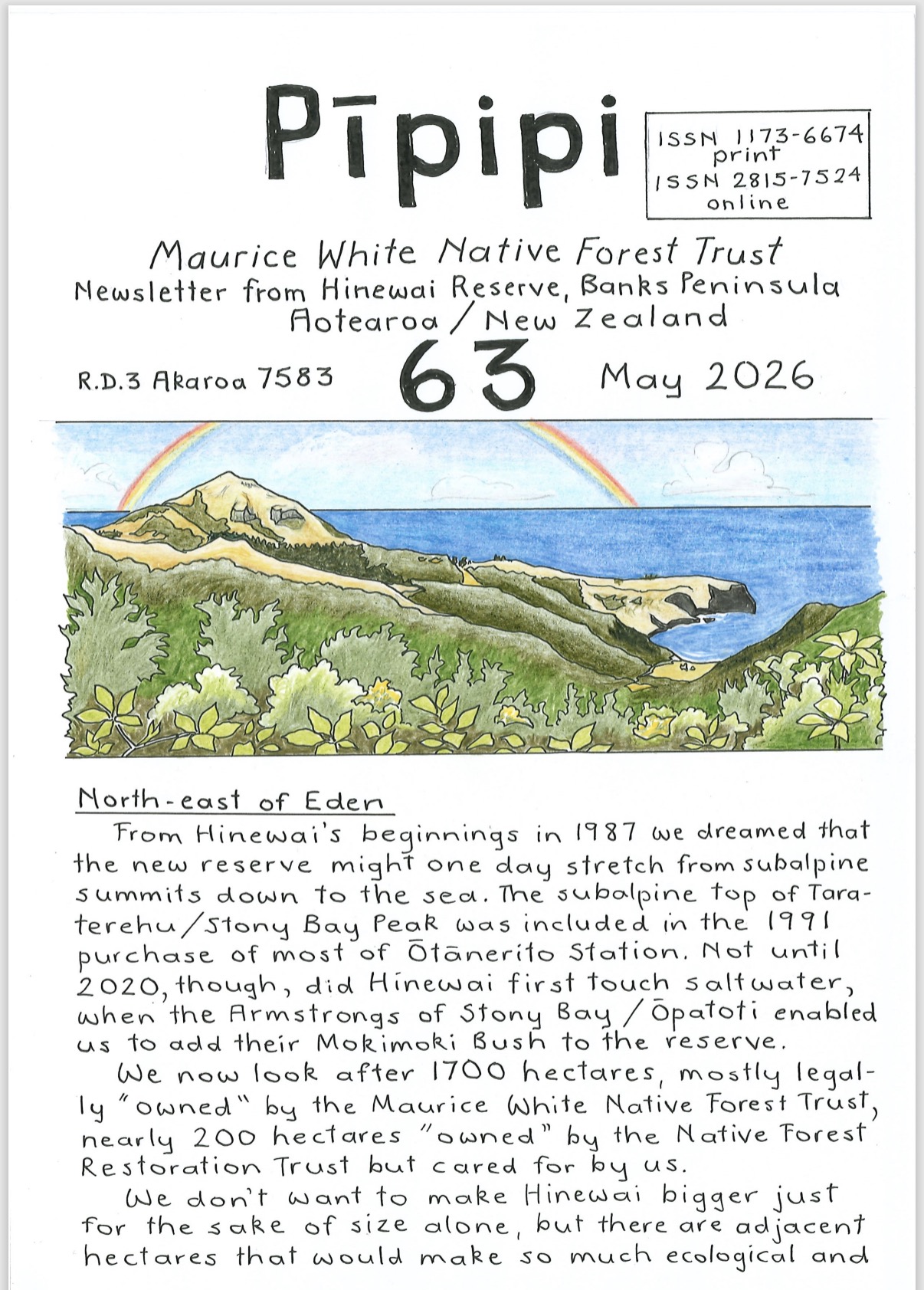
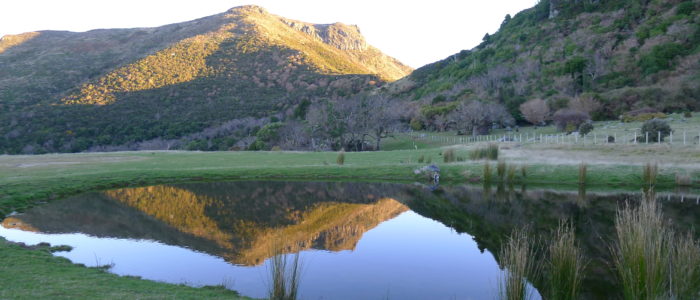
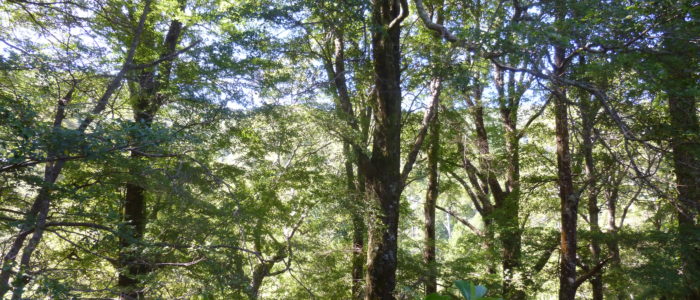
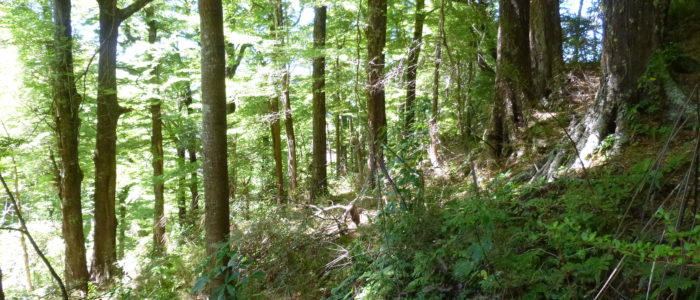
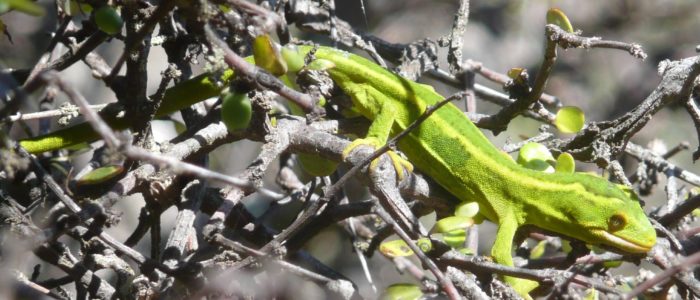
Hinewai is an ecological restoration project on Banks Peninsula, privately owned and managed by the Maurice White Native Forest Trust, but freely open to the public on foot.
Hinewai Reserve occupies 1250 hectares in the south-eastern corner of Banks Peninsula on the South Island’s east coast. The reserve lies east of the town of Akaroa.
Initially 109 hectares were purchased by the Maurice White Native Forest Trust in 1987. Since then the trust has greatly enlarged the reserve through the purchase of Ōtānerito Station in 1991 and through several subsequent additions. Since 2016 the trust has also looked after the adjacent 192 hectare Purple Peak Curry Reserve, after its purchase in that year by the New Zealand Native Forest Restoration Trust.
Donations
Donations may be made by Direct Credit to the following
Please Note As from 27 November all New Zealand banks will require the full name of the Account Holder/Owner and the Account Number when any payments are being made. We understand that this will also apply to any donations. Therefore if you are making a donation to Hinewai you may need to enter both the account name and the number. The information that you will need to supply is:
Account Holder: Maurice White Native Forest Trust
Account Number: 02-0832-0044225-00
Swift Address: BKNZNZ22 Bank of New Zealand, Wellington
Hinewai Reflections
Over the years it has often been suggested that we should publish a collection of Hugh Wilson’s art. However, while Hugh is willing to talk endlessly about Hinewai and has published extensively in botanical journals and books, he has been reluctant to produce anything of a personal nature. Some years ago when an event in his honour was suggested, Hugh responded, “I am a delicate flower used to blooming in quiet places and have already had sufficient attention shone on me. Another event could cause severe wilting”.
We were delighted, then, when Hugh’s long-time friends, Peter Gough and Andy Buchanan, finally convinced Hugh of the value of a high-quality book of his artwork. They argued that this would give a permanent format to the work, that it would provide a collection that many of his friends - and particularly Hinewai supporters - would value, and that it could be a source of income for Hinewai. Click on the link below for more information about the book and how to order.
A video has appeared on YouTube that purports to show the story of Hinewai: "New Zealand's Most Hated Plant Is Rebuilding a Forest That Disappeared 170 Years Ago"
It is not entirely accurate. Here are Hugh Wilson’s comments about the content.
“The new video on Hinewai Reserve was a curious mix of fact and fiction – good on the natural regeneration story, but the waterfall story was way out. The hydrology of Banks Peninsula is much more subtle and complex than that and the restoration of native forest, while wonderful from nearly every aspect imaginable, does not have such a simple effect on waterflows in Hinewai’s streams, which are permanent flows with or without forest cover. Forest cover no doubt modulates extreme deluge events, or even more normal heavy rainfall, but to what extent is still to be more accurately scientifically assessed. Much of the video was more or less factual though."
Hugh Wilson. Kaitiaki o Hinewai.
July 2026
Caution
Everyone is welcome to walk our track network, at your own risk. Some hazards inevitably exist in such steep wild terrain. We put in a lot of effort to ensure that visitors' experiences are as safe as we can reasonably make them, but please take care. Parents should be aware that many of the tracks may be unsuitable for very small children. Young children must be kept under close supervision and told not to touch any traps.
Special Alert
In December 2021 Hinewai suffered a major rain event which sent huge landslides into and down the streams, cut tracks, swept away bridges, destroyed boundary fences etc. Many routes from the Visitor Centre are now walkable again, but it will take several more months to restore the entire walking network. Current information is available at the Visitor Centre when you arrive.
Current Newsletter